
Emergencies
What to do in the first ten minutes after a pipe bursts
A burst pipe, minute by minute: shut off the main, stay clear of electricity, drain the lines and limit the damage. Plus the one thing to do today.
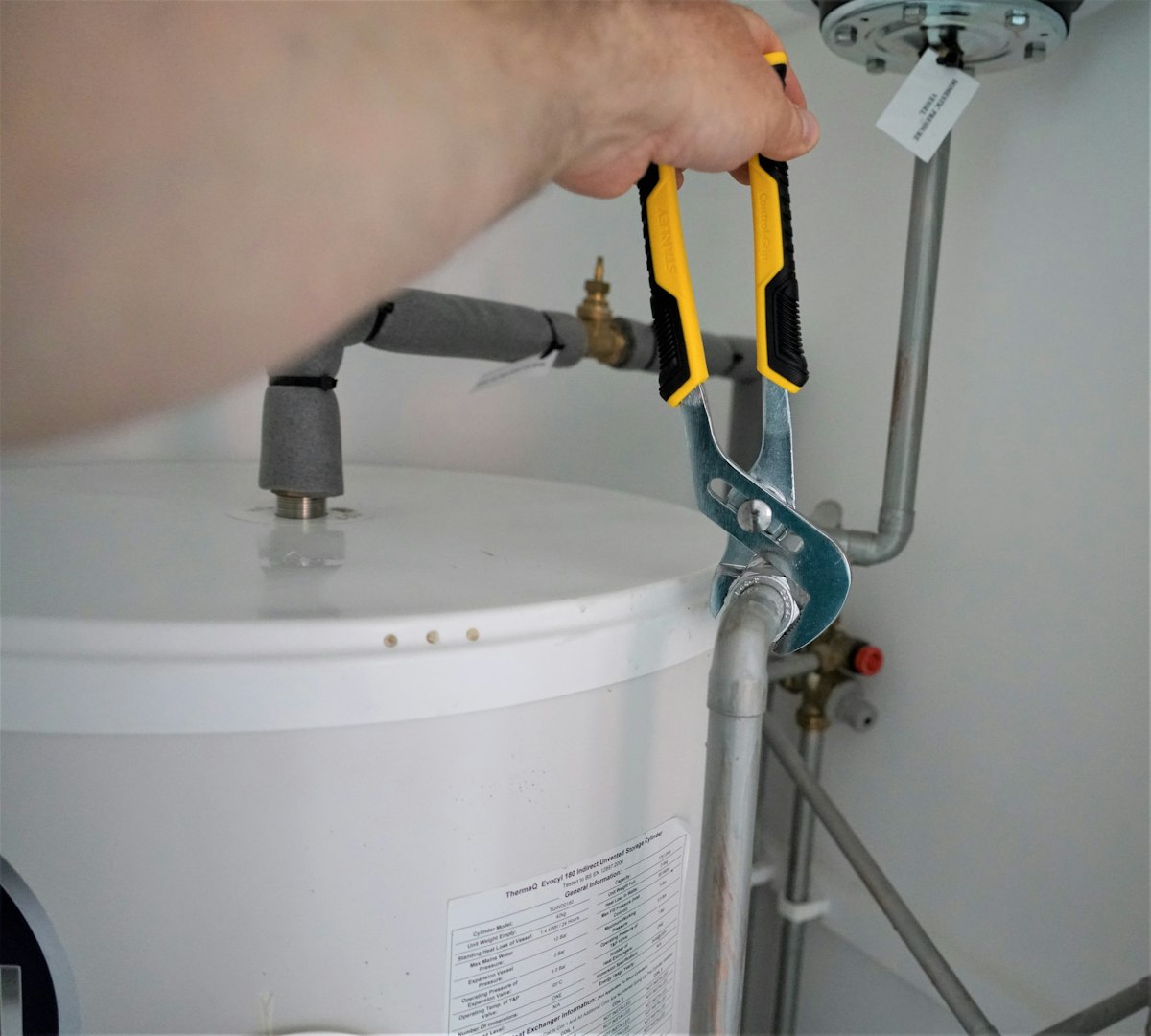
A water heater works harder in winter than at any other time of year. The water coming into your house gets colder as the weather does, so the heater has to run longer to bring it up to the same temperature, and everyone wants longer showers when it's cold out. That extra work is why small problems tend to turn into no hot water in December or January.
Ten minutes in October can catch most of them. You don't need tools for this, and you shouldn't open any panels. Just look, listen and feel around the outside of the heater.
Start at the floor and work your way up.
| What to check | What normal looks like | Call if |
|---|---|---|
| The floor and the base of the tank | Dry, with no rust stains or mineral crust | There's water, a rust ring, or a drip pan that has water in it |
| The relief valve pipe on the side of the tank | The pipe running down from the valve is dry at the end | It drips, has crusty deposits at the tip, or has water near it |
| Pipes and fittings on top | Dry connections with no green or white buildup | You see corrosion, moisture, or the cold shutoff valve is weeping |
| Vent pipe (gas heaters) | Firmly attached, rising toward the roof, no gaps | It's loose, disconnected, or there's soot or scorching near the top of the heater |
| Burner flame (gas heaters, through the small window) | A steady blue flame when it's heating | The flame is mostly yellow or orange, or it lifts and flickers |
| Hot water at the tap | Clear, no smell, reaches temperature as usual | Only the hot water is rusty, smells like rotten eggs, or runs out much sooner than it used to |
| Sounds | Quiet, with a soft burner sound on gas units | Loud popping, rumbling or banging while it heats |
Water on the floor doesn't always come from the heater itself. A drip from a fitting above, a nearby supply line, or condensation from a furnace can all end up in the same spot. Wipe the area dry and check again a few hours later. If you can't trace it, leak detection will tell you where it's coming from.
The relief valve, usually called the T&P valve, opens to let water out if the temperature or pressure in the tank gets too high. A pipe that drips now and then is telling you something, either about the valve or about the pressure in your system. Many manufacturers describe a way to test the valve in the owner's manual, but on an older valve that hasn't been opened in years, testing it can leave it dripping for good. If yours has never been tested, that's a reasonable thing to have a plumber look at.
Popping and rumbling usually mean sediment. Minerals settle at the bottom of the tank, water gets trapped under them, and it boils in small bursts when the burner fires. It's mostly a sign of lost efficiency, not an emergency. Manufacturers recommend flushing tanks periodically to clear it; how often depends on the model, so check the manual.
A rotten egg smell in the hot water only is a common reaction between the water and the tank's anode rod. It's unpleasant rather than dangerous, and there are fixes. A rotten egg smell in the air near a gas heater is different: leave the house and call your gas utility from outside.
The U.S. Department of Energy suggests 120 degrees Fahrenheit as a setting that balances comfort, energy use and scald risk for most households. If your dial has a "hot" mark or a letter scale instead of numbers, the manual explains what each setting means. If people in the house keep running out of hot water at a normal setting, cranking it higher usually isn't the answer; it can point to sediment, a failing part, or a heater that's too small for how the house uses water.
Plenty of water heater problems are fixable. Gas burners and pilot assemblies, thermostats, electric heating elements, relief valves and drain valves can all be replaced. Those repairs make sense on a heater whose tank is still sound.
A leak from the tank body itself is different. Once the steel tank is rusting through, it isn't something that can be patched, and it tends to get worse, sometimes all at once. That's the point where replacement is the only real option.
Age matters too. The label on the side lists the serial number, and most manufacturers encode the manufacture date in it; the manufacturer's website or support line can tell you how to read yours. An older heater with a list of small problems is often a better candidate for replacement than for another repair, especially going into winter. Our water heater service covers both, and we'll tell you plainly which one makes sense before any work starts.
Find the cold water shutoff valve on the pipe going into the top of the heater, and on a gas heater, the gas shutoff on the supply line beside it. Don't turn them, just know where they are. If the heater ever starts leaking, closing the cold water valve stops the tank from refilling while you call.
If you'd rather have someone look it over, call 720-916-7720. Estimates are free.
A burst pipe, minute by minute: shut off the main, stay clear of electricity, drain the lines and limit the damage. Plus the one thing to do today.
Gurgling toilets, slow drains in several rooms, sewer smells. What each sign usually means, and why fall is the right time to check your sewer line.
Disconnect hoses, close the indoor shutoff and check for drips. A plain checklist for winterizing outdoor faucets in Castle Pines and the Denver area.
A real person answers 24/7. Free estimates, quoted up front.